Our Approach
Our Neurodiversity-Affirming Approach to Occupational Therapy
“When a flower doesn't bloom, you fix the environment in which it grows, not the flower.” Alexander Den Heijer
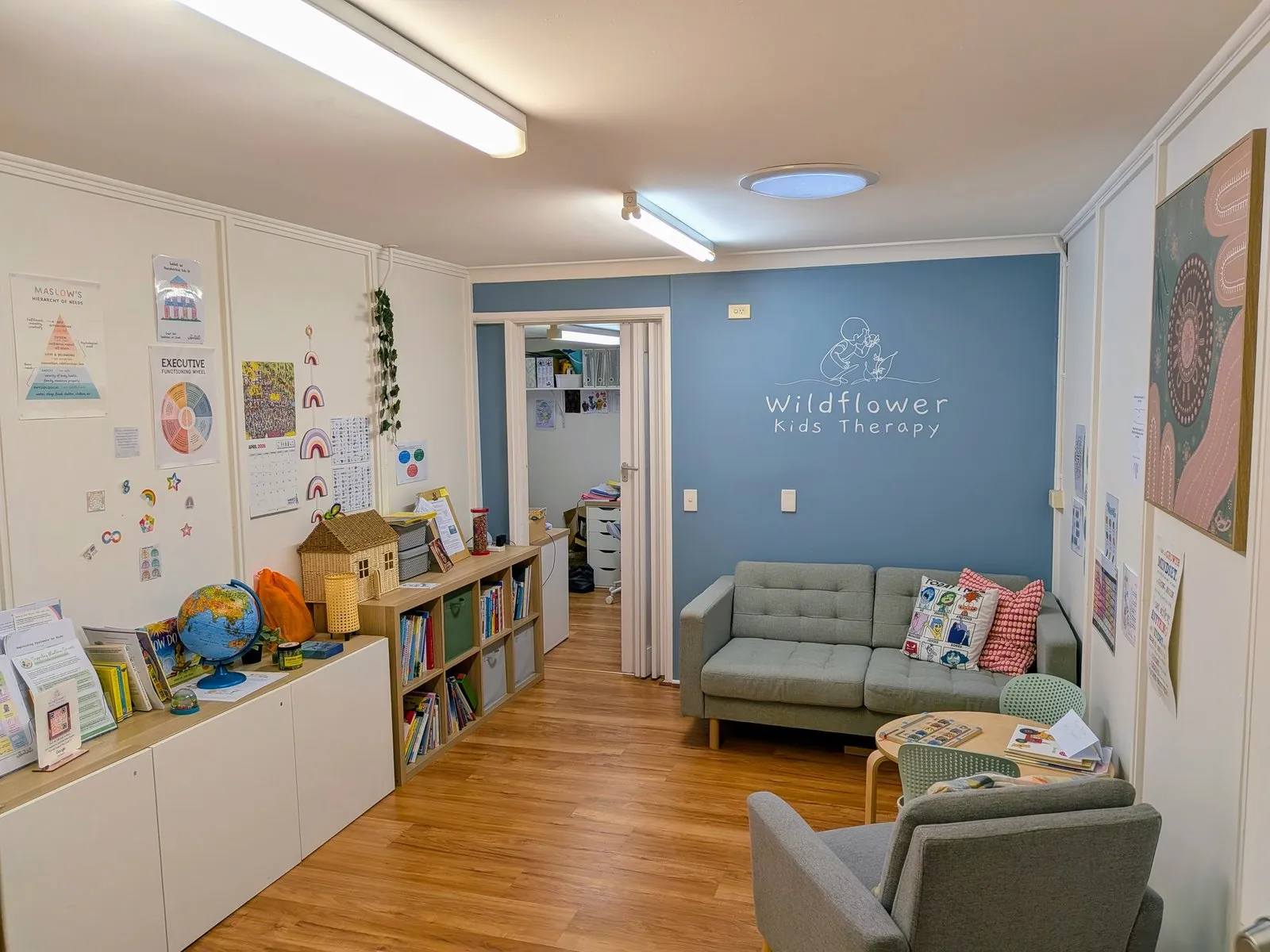
Our name comes from this idea. A wildflower grows on its own terms, in its own way, when the conditions are right. Our job is the conditions: the environment, the demands and the supports around a child. Not the child.
What does neurodiversity-affirming occupational therapy mean?
Every child has their own strengths, interests and support needs, whatever their neurotype and whether or not they have a diagnosis. Being neurodiversity-affirming means we treat differences in how a child thinks, plays, moves and takes in the world as differences, not as problems to be corrected.
We work from the social model of disability. Many of the hard things children face, and neurodivergent children especially, come from places that weren't built with them in mind: loud classrooms, rigid routines, expectations that assume there is only one way to learn. So when something isn't working, we look first at what is around the child and what is being asked of them.
Our first goal
That your child feels safe enough to be themselves, and wants to be in the room.
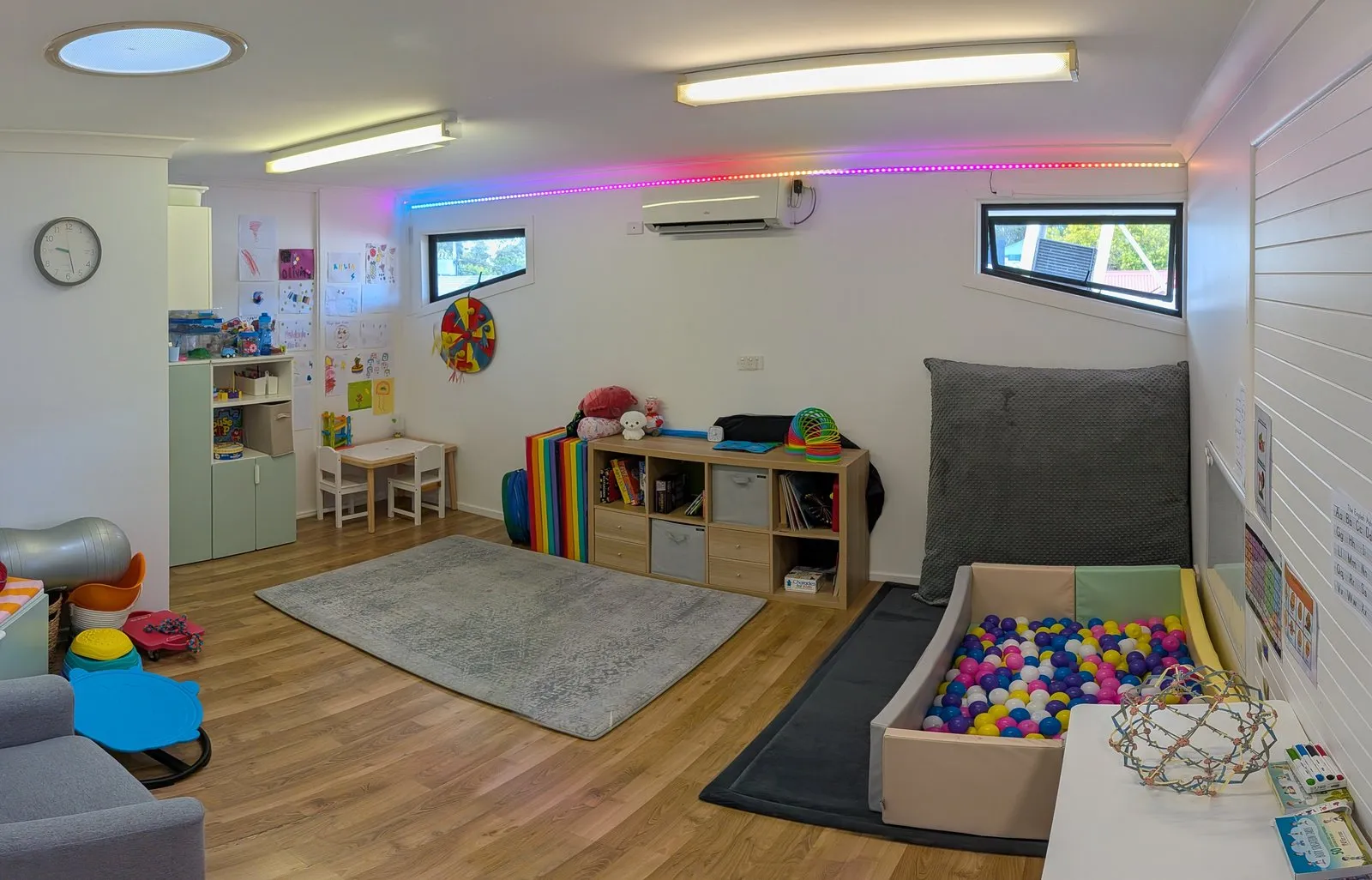
That is why our sessions are play-based and follow your child's lead. If they arrive with a passion for dinosaurs, trains or Minecraft, that interest becomes part of the session, because that is where engagement, pride and real learning live. We want children excited about therapy, not enduring it.
Belonging, not fitting in
Fitting in means changing yourself to be accepted. Belonging means being accepted as you already are.
Many children learn to hide parts of their true selves just to get through the day. That masking can cost them a lot: exhaustion, anxiety, losing touch with their own needs, feeling liked but not known. We don't teach children to mask. We help them understand how their brain and body work, and we work with families and schools to set up supports that honour who they are.
Our hope is that this helps children speak up for what they need and feel good about who they are.
Connection before correction
Children learn through safe relationships, not control. As educator Rita Pierson put it, "kids don't learn from people they don't like."
In practice, we co-regulate before we problem-solve, and we validate before we redirect. A child who is dysregulated can't take in something new in that moment, so the first job is helping their body settle. The learning comes after.
It is also why you won't see sticker charts or point systems in our sessions. Rewards focus on what a child is doing rather than why, they can teach children that approval has to be earned, and they don't build the regulation, flexibility and communication skills children actually need.
When things go wrong, we focus on repair, never shame. Shame says "I am wrong" and shuts learning down. Repair says "something went wrong, and we can put it right together".
Understanding the nervous system
A lot of what looks like behaviour is really a nervous system state. When a child is in fight, flight, freeze or fawn, or has shut down completely, they aren't choosing that response. Their body is protecting them.
We also see stimming, quiet time, screens and time alone for what they often are: valid ways a child regulates.
In sessions we help children:
- Notice what their body is telling them
- Find what calms them
- Recognise when they need processing time or a quiet space to reset
To see what's happening in the brain when a child is overwhelmed, read our post on the hand model of the brain.
"Can't right now", not "won't"
A child's capacity changes from day to day, even moment to moment. Sensory load, a poor night's sleep, a hard morning at school, a change in routine: each one drains the battery. Something a child managed easily on Monday might be out of reach by Thursday.
So we plan each session around the child who walks in, not the one we pictured. Some sessions look like big steps forward. Others are about rest and connection. Both count.
Choice and autonomy
For many children, and especially children with a PDA profile, a direct instruction can feel like a threat to their autonomy. So we keep pressure low, offer real choices, and use collaborative language like "I wonder if we could..." so a child can say yes on their own terms.
You can read more about this on our ADHD and PDA page.
Honest about progress
We don't promise outcomes, and we're upfront about why. Every child is different, and progress is rarely a straight line. Goals are set with you, around what matters to your family. They are about taking part in real life at home, at school and in play, and they start from your child's strengths and interests. They are never about making your child less like themselves.
“The goal isn't a perfect pencil grip. It's helping a child find joy in expressing themselves.”
And for parents: a good enough parent is good enough. You know your child best, and we work alongside you, not over the top of you.
A whole clinic behind your child
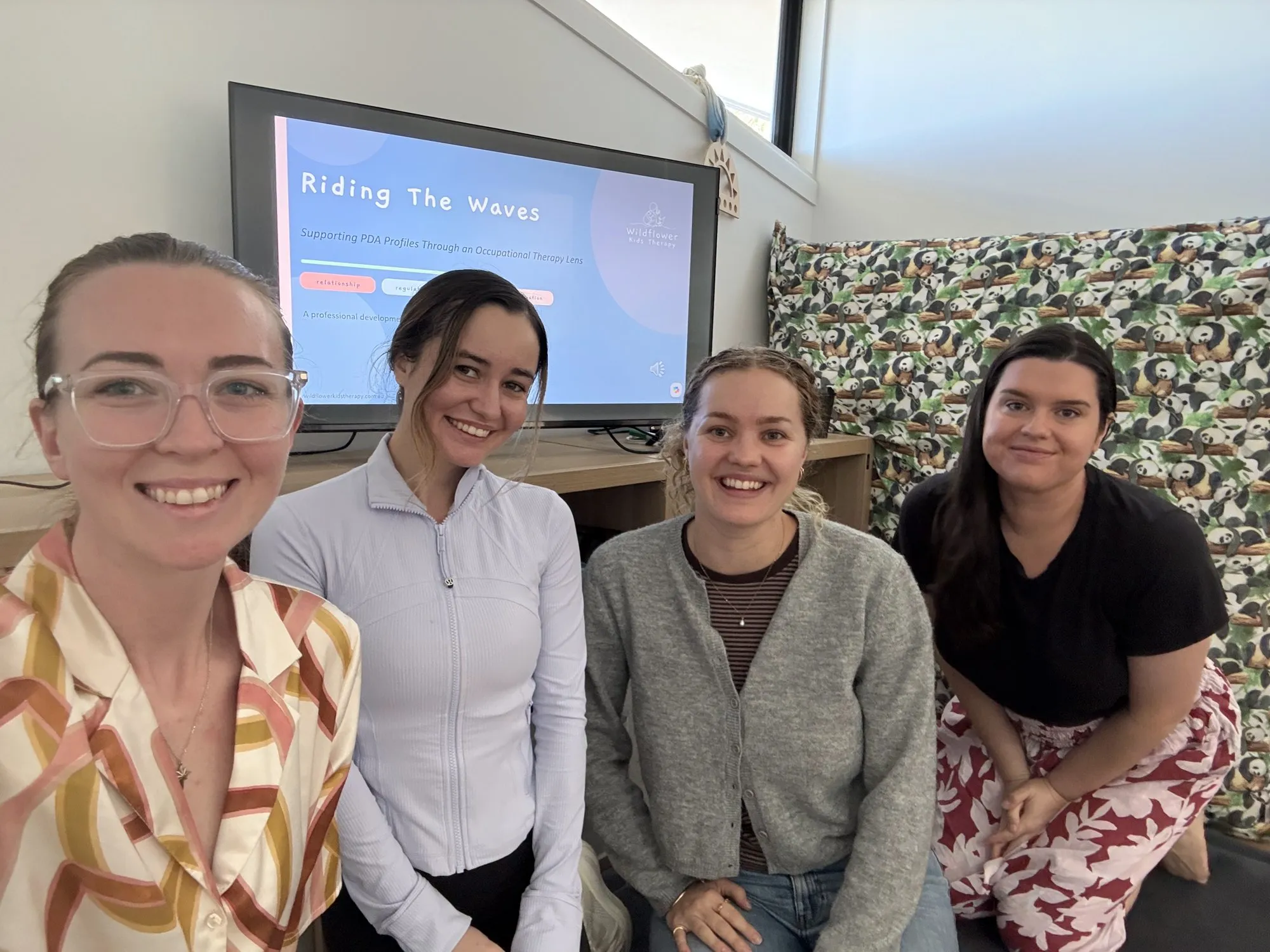
We're a small, family-owned practice, and that is by design. It lets us stay flexible, curious and closely connected to every family.
Our clinicians share ideas, back each other up and bring different perspectives to each child, so your child is supported by the whole clinic, not just one therapist. Sometimes that means a second clinician joins a session, on purpose.
We also share our space with the Wildflower Kids Collective, independent speech pathology and psychology practitioners who share our values. Meet the team.
The work we draw on
Our approach is grounded in established research and practice. Some of the people whose work shapes how we think:
Dr Ross Greene
Collaborative and Proactive Solutions
Dr Mona Delahooke
Understanding regulation before behaviour
Dr Stephen Porges
Polyvagal Theory and the role of felt safety
Dr Dan Siegel & Dr Tina Payne Bryson
Connection-based parenting
Dr Brené Brown
Shame and vulnerability
Alfie Kohn
Why rewards and punishments fall short
Dr Vanessa Lapointe & Dr Deborah MacNamara
Attachment-based parenting
Kristy Forbes
And the wider PDA-affirming community
Greg Santucci
Occupational therapy and regulation
Is Wildflower the right fit for your family?
Where we see families
We work with children from 2 to 17 across the Gold Coast and Northern NSW. That includes children who are autistic, AuDHD or ADHD, children with a PDA profile, younger children where there are questions about development, and children with learning differences such as dyspraxia (developmental coordination disorder) and dysgraphia. It also includes children without a diagnosis who are simply finding things hard. Your child doesn't need a diagnosis to see us, and you don't need to know what's going on before you reach out.
We take time to get to know each family before therapy starts, to make sure our way of working suits your child. That means we don't take on everyone, and that's on purpose.
Paediatric occupational therapy
What OT looks like here, where we see your child and the areas we support.
Read more →Autistic and AuDHD children
Affirming support that helps your child understand how their brain and body work.
Read more →ADHD and PDA profiles
Demand-aware, autonomy-first support for children who can't, right now.
Read more →Does this sound like the support you're looking for?
If this is how you want your child to be supported, or you're not sure yet what support they need, we'd love to hear from you. Call us, email us, or fill in the enquiry form and we'll be in touch.