Services · ADHD & PDA
Occupational Therapy for ADHD and PDA Profiles
What looks like refusing is often a child who can't, right now.
For children with ADHD, knowing what to do and being able to do it are two different things. Getting started, shifting to something new, or stopping something they love can take far more effort than it looks from the outside.
For children with a PDA profile, demands are one of many things that can feel like a threat, even an everyday request. Their nervous system responds the way it would to any threat.
From the outside, both can look like defiance. Neither is.
How we work with ADHD
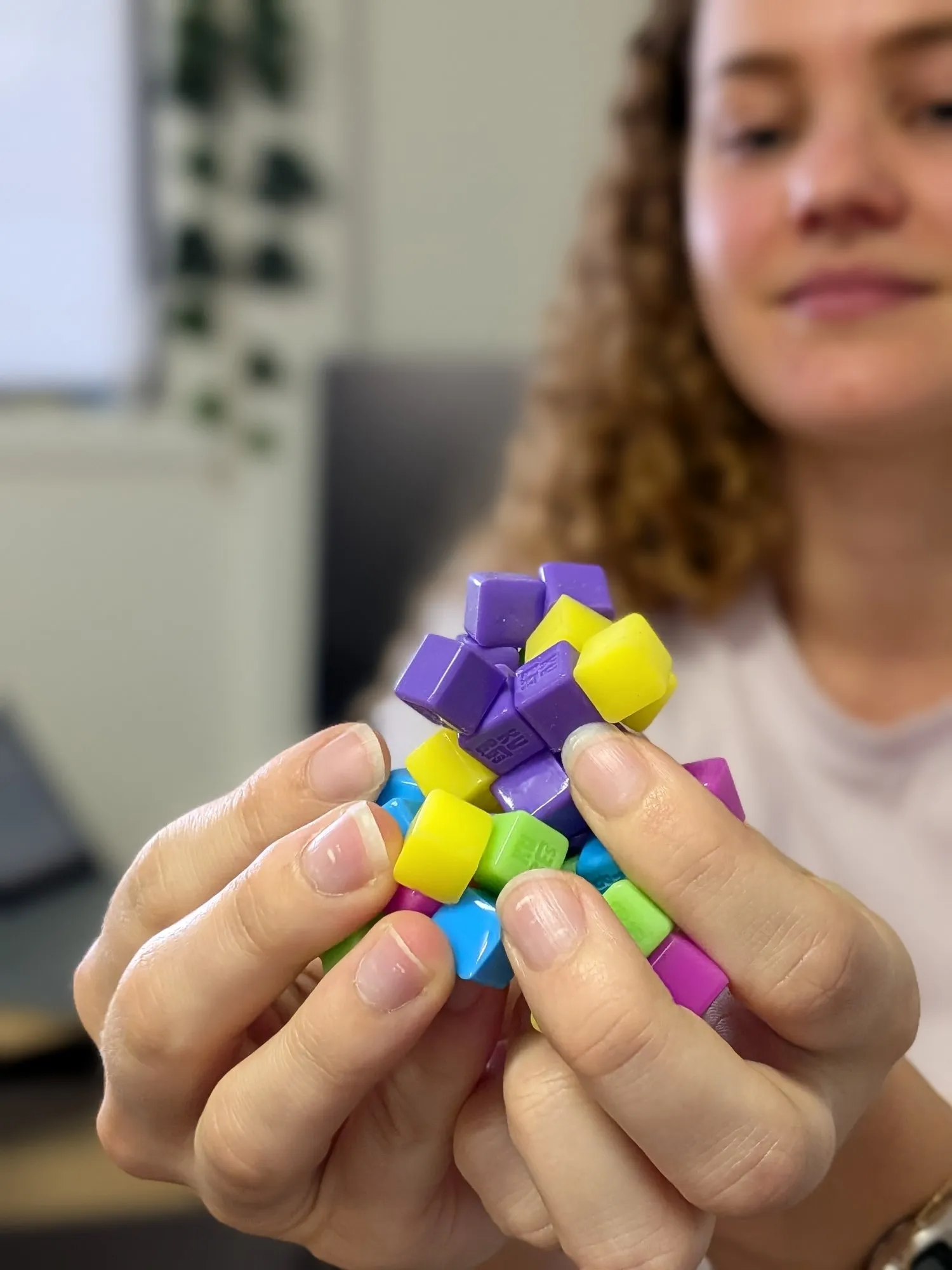
- Executive functioning: starting, sequencing, switching, finishing, and time
- Regulation and movement, rather than asking a child to sit still and try harder
- Routines that survive a bad day, not only a good one
- Attention and concentration in the settings that matter: home, classroom, homework
- Protecting self-esteem, because children with ADHD hear far more correction than their peers do
- Working with the school on accommodations and expectation
Energy as a finite daily allowance
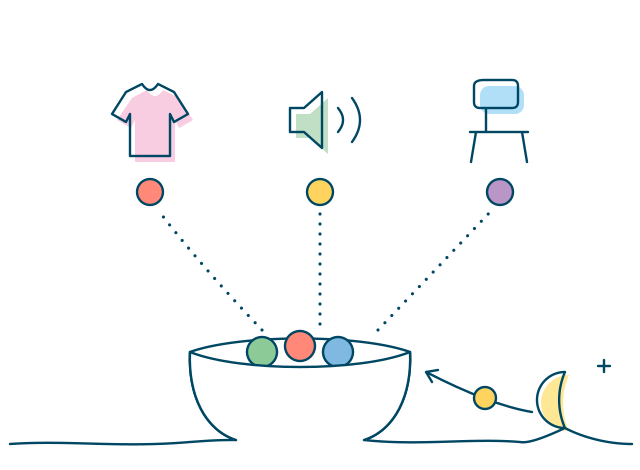
One idea we come back to often is Spoon Theory, from Christine Miserandino. Imagine starting the day with a small handful of spoons. Getting dressed, concentrating, coping with noise and holding still in a classroom each use one up, and rest is the only thing that gives them back. With children we often use real objects they can hold and count, like popsicle sticks or counters. It gives them a way to say "I haven't got enough for that right now" before they run out altogether. The sticks are never earned or taken away. They aren't a reward, just a way to see where the energy goes.
How we work with a PDA profile
PDA stands for Pathological Demand Avoidance, which is still the clinical term. We prefer Pervasive Drive for Autonomy, because "demand avoidance" only tells half the story. What can look like a child deliberately saying no is usually their nervous system reacting to a threat, and demands are just one kind of threat. For some kids, it feels like their body says "no" before they've had a say. Underneath is a deep need to feel safe and in control. You'll still see the full term in reports, and it describes the same profile.
Being demand-aware changes how we speak, not just what we do:
- We reduce the demand a child perceives rather than pushing through it
- We use indirect, collaborative language. I wonder if... rather than first, then
- We offer genuine choice, including the choice to say no
- We protect autonomy, because for a PDAer autonomy is a nervous system need, not a preference
- We do not rely on direct commands, ultimatums or pressure to comply
Declarative language means commenting rather than instructing. I notice the shoes are still by the door rather than put your shoes on. Sometimes it means dropping the word you altogether so that nothing lands as aimed at the child.
It only works if the autonomy behind it is genuine. A child with a PDA profile will sniff out pressure hidden inside a technique, and the moment they do, it stops working. The goal is autonomy and scaffolding, not a gentler way to make them do the thing.
This is one of the areas we have the most depth in.
Who we work with
Children and young people aged 2 to 17 who are ADHD or AuDHD, or who have a PDA profile, including children who are undiagnosed but show these traits.
Every child is screened before we begin, so the fit between family, child and therapist is right from the start.
Frequently asked questions
A few common questions we hear from families starting out
Do you use reward charts for ADHD?
No. Rewards focus on what a child is doing, not why it's hard, so we'd rather work on the why with you. If a chart is part of your routine right now, that's okay, and we can talk it through together.
Does my child need a PDA diagnosis?
PDA is not a standalone diagnosis in Australia. It is a profile, most often described alongside autism. We work from the profile, not from the paperwork.
What if my child refuses to come to sessions?
That is information, not a failure. We would look at what the session is asking of them and change it. Sometimes that means starting at home, or starting with the parents.
Do you work with schools?
Yes. Often the most useful change is in the classroom environment and in what is being expected.
Still Have Questions?
We understand every child and family is different. If you're unsure where to start or would simply like to talk things through, our team is always happy to help.
You can contact our team via phone, email, or our enquiry form and we'll help guide you through the next steps.
If you'd like to take the next step, you can complete our Getting Started Form below.