
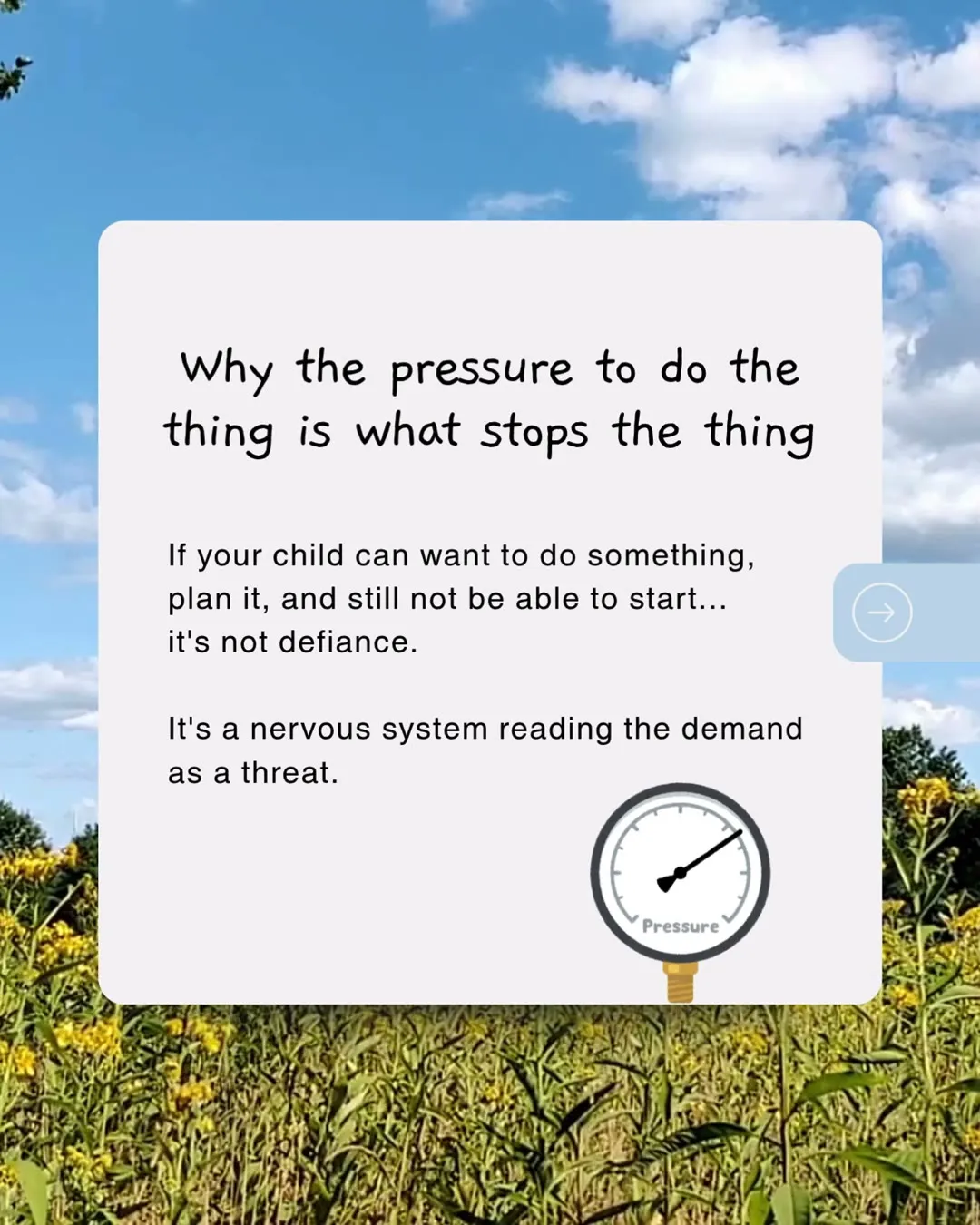
Why the pressure to do the thing is what stops the thing
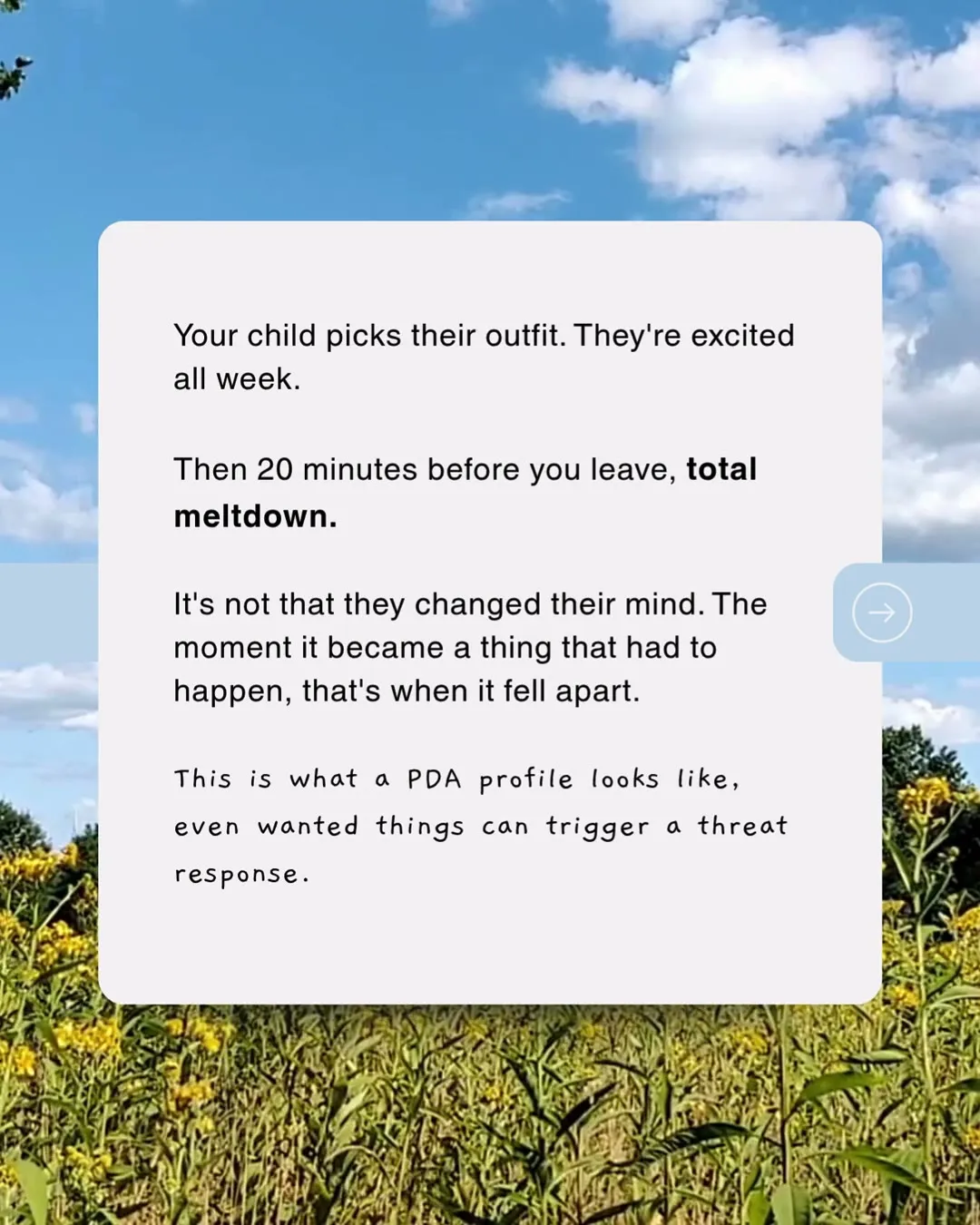
Here is a moment a lot of parents will recognise. Your child asks to go to the party. They choose what to wear. They are genuinely looking forward to it. Then twenty minutes before you leave, the whole thing collapses, and they are not going anywhere.
The obvious reading is that they changed their mind, or that they are being difficult on purpose. Neither is usually what happened.
What happened is that going to the party stopped being an idea and became a thing that had to be done. And for some kids, that shift is the problem.
What a demand actually does
For a child with a PDA profile, demands of all kinds set off an automatic threat response. Not just the demands you would expect, like getting dressed or getting in the car. Also the ones they want to do. Also the ones they thought of themselves.
PDA stands for Pathological Demand Avoidance, which is still the clinical term. We prefer Pervasive Drive for Autonomy, because “demand avoidance” only describes the behaviour, while “drive for autonomy” describes the need underneath.
The PDA Society describes it as a neurological tug of war between brain, heart and body, where being told to do something, or wanting to do something, often means you then just can’t. One young person they quote puts it better than any clinical description I have read:
“It’s like you’re gaming and you have the main controller, and then sometimes someone yanks that controller away from you and you lose control and feel panicky.”
Mollie, quoted by the PDA Society
That is the part worth sitting with. Your child does want to. The wanting and the doing have been pulled apart, and panic has filled the gap.
Why rewards and consequences make it worse
Most of what we are taught about parenting assumes a child who is choosing. Reward the behaviour you want, apply a consequence to the behaviour you don’t, and the child will weigh it up and adjust.
A reward is still a demand. A consequence is a demand with fear attached to it. When the difficulty is a threat response rather than a decision, adding pressure to the pressure gets you more panic, not more cooperation. Often it also costs you something you needed more, which is your child feeling safe with you.
I want to be clear about who this is a criticism of, which is nobody. Parents are handed strategies that work for most children and are told to be consistent. When those strategies backfire, it feels like a personal failure. It isn’t one. You have been given the wrong tool for the child in front of you.
Change the sentence first
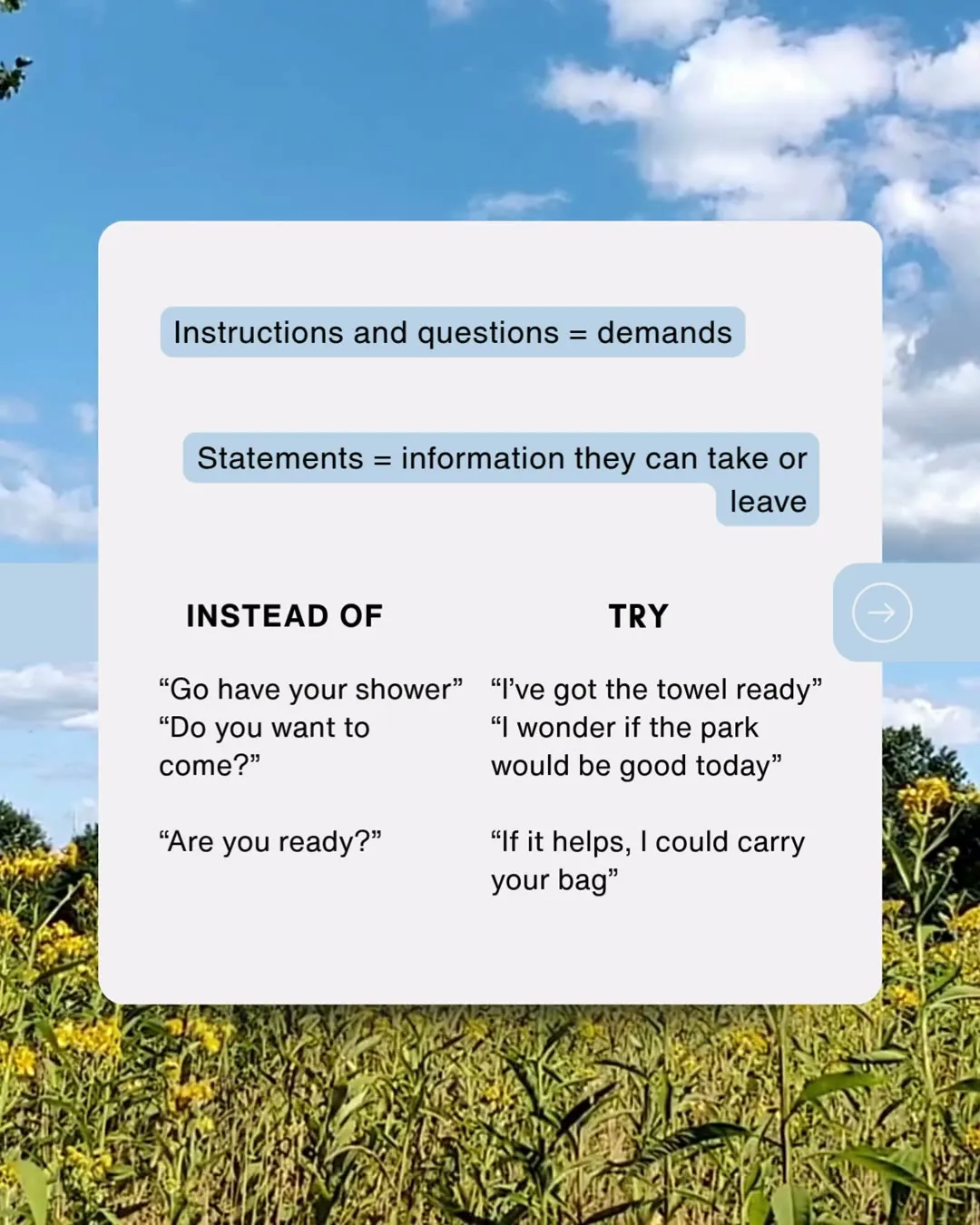
The single most useful shift is how you word things. Direct instructions and direct questions land as demands. Statements land as information, and information the child can pick up without anything being required of them.
This is called declarative language, and the difference is smaller than you would think.
| When it’s time to… | Something you could say |
|---|---|
| Have a shower | “I’ve got the towel ready.” |
| Head to the park | “I wonder if the park would be good today.” |
| Put shoes on | “I know your shoes are by the door.” |
| Eat something | “I’m curious if toast would work better.” |
| Start homework | “I guess we could have a look at it together.” |
| Leave the house | “If it helps, I could carry your bag.” |
Questions are kryptonite. Ask as few as you can. A question requires an answer, and requiring an answer is a demand, even when the question is friendly and even when the answer would have been yes.
You will feel like you are being indirect, or letting things slide. What you are actually doing is removing the pressure that was blocking the thing, so the thing becomes possible again.
Then change what you are aiming at
This is the bit that takes longest, and it matters more than the wording.
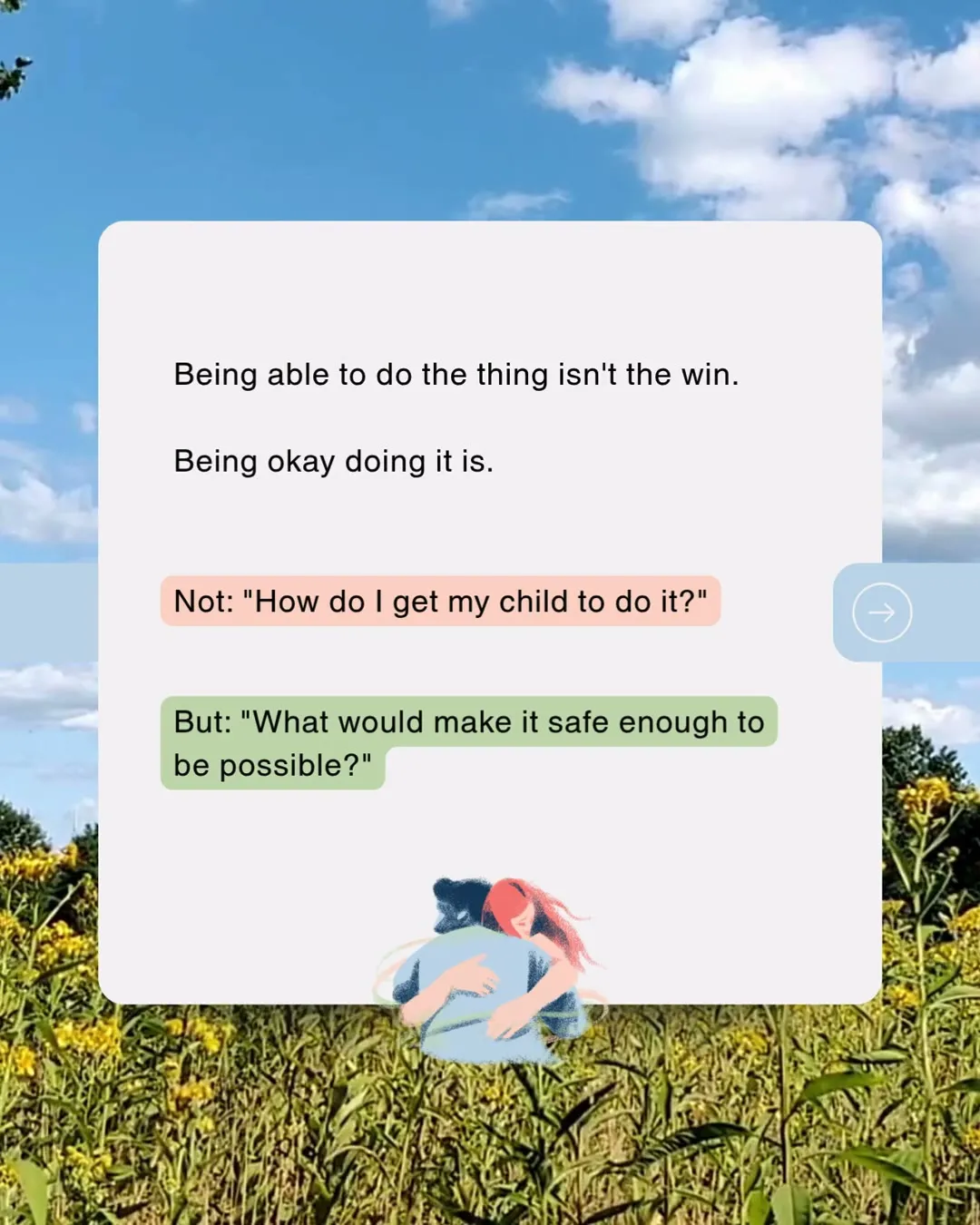
The goal is for your child to be okay doing the thing.
Plenty of children can physically do the task. They can shower, they can get in the car, they can walk into the classroom. If a child is refusing something they are capable of, they are telling you something about that experience is distressing, and the distress is the actual problem.
So the aim shifts from compliance to coping. That means intentionally accommodating for a while, and holding a longer view than today’s task. The skill still matters. A child who feels safe can learn it, and a child in a threat response cannot.
What this looks like on a normal Tuesday
- Drop the questions you don’t need answered. Most of them, you don’t.
- Say what is available rather than what should happen. “There’s fruit cut up in the fridge” instead of “come and eat something.”
- Give the information and then physically go and do something else. Presence can read as pressure.
- Let them see you do the thing without inviting them to join in.
- Notice which parts of the day are already going well and stop optimising those.
- Expect it to fluctuate. What worked last Tuesday may not work today, and that is the condition, not a sign you did it wrong.
Where to read more
The PDA Society in the UK is the best starting point I know of. Their “what helps” guides are practical and written with PDA adults and young people, not just about them.
Then listen to PDA adults directly. Kristy Forbes is autistic with a PDA profile and has PDA children, and hearing how she describes the experience from the inside changes how you read your own child. Orion Kelly is another perspective worth your time.
If you would like support with this at home or at school, our page on ADHD and PDA occupational therapy explains how we work.
The question worth carrying into tomorrow: what would make it safe enough to be possible?